Healthier Planet, Healthier People
Posted:
Posted:

The NHS in Cheshire and Merseyside has reduced its carbon footprint over the last decade as part of a national drive to become the first health service in the world to achieve net zero.
Thanks to a range of initiatives, including the installation of solar panels, introducing staff cycling schemes and work into creating greener anaesthesia and medicines, the NHS across the region has saved enough carbon to power at least 21 homes with electricity for a year.
The action comes following growing evidence of the health impacts of climate change and air pollution, and alongside the backing of nine in 10 people in England who support the NHS taking action to reduce its carbon footprint.

Air pollution is linked to killer conditions like heart disease, stroke and lung cancer, and academics have linked high pollution days with hundreds of extra out-of-hospital cardiac arrests and hospital admissions for stroke and asthma.
The changing climate is leading to more frequent heatwaves and extreme weather events. Last year alone, more than 2,500 people died during heatwaves.
Several initiatives across Cheshire and Merseyside have contributed to a reduction in emissions including:
Crucially, many of these initiatives are not only helping the NHS achieve their net zero targets, they are also improving patient care.
Prior to installation, St Catherine’s bought around 121,000kWh of energy each year from the grid. The new system now meets most of this requirement, at a unit cost nearly 60 per cent lower in price, saving the trust money and helping to tackle climate change. There will be times when the solar generation exceeds consumption; the excess solar electricity can be sold to the grid and potentially provide income to the trust of over £425,000 during the first 25 years.
Greener anaesthesia and medicines optimisation work, which includes a robust strategy on over-prescribing and the promotion of self-care, diet and lifestyle messages, adds social value, health and climate benefits, making heathcare more sustainable for future generations.
The region is marking one year on, with a North West Region Greener NHS Roadshow event on Wednesday 10 November, from 12noon-1pm, bringing NHS people and partners together across the region to celebrate and learn from these innovations, in line with the United National Climate Change Conference, COP26, being held in Glasgow between 31 October and 12 November.
David Sweeny, Executive Director of Partnerships and programme lead for sustainability for the Cheshire and Merseyside Health and Care Partnership, said: “We cannot begin to describe the importance of this work, so far we have had superb collaboration from all our partners and we continue to integrate our developments with partners, experts and technology.”
Dr Nick Watts, Chief Sustainability Officer for the NHS, said: “The evidence that the climate emergency is a health emergency is overwhelming, with health professionals already needing to manage its symptoms.
“So, it is fantastic to see NHS staff across the North West region helping us to be on track to be the first health service in the world to achieve net zero.
“The UK is host to this year’s UN climate change conference of the parties – COP26, which demonstrates that every part of our society needs to play their part in reducing pollution and responding to climate change.”
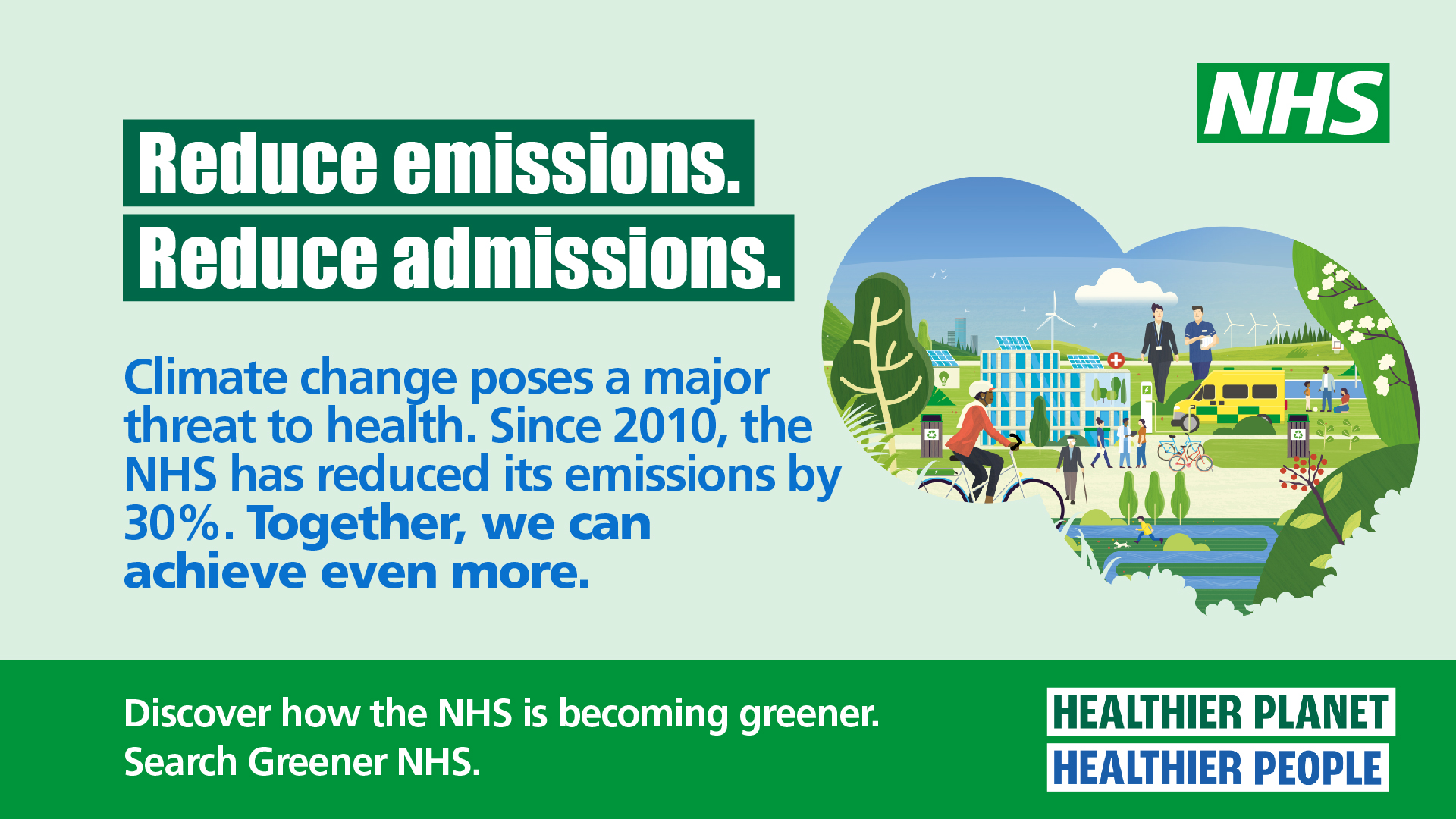
Nationally, the NHS is on track to reduce its carbon emissions this financial year, equivalent to powering 1.1 million homes with electricity for a year, while it is calling on its 80,000 suppliers to commit to reducing their carbon footprint. Since 2010, the NHS has cut its emissions by a third.
To find out more about the North West Region Greener NHS Roadshow, please visit: www.events.england.nhs.uk/events/north-west-greener-nhs-roadshow
To find out more about how the NHS is becoming greener, search ‘Greener NHS’